Why Model Growth Is Faster With Aluminum Foundry Casting Techniques
Aluminum foundry casting techniques have arised as an essential approach in model growth. Their quick manufacturing capabilities simplify the design procedure, permitting for quick iterations and adjustments. The lightweight nature of aluminum helps with ingenious designs, while intricate geometries can be attained easily. In addition, lowered preparations and price performance additionally improve this technique. Nevertheless, the ramifications of these advantages extend beyond simple rate. What elements add to this accelerated growth?
Recognizing Aluminum Foundry Casting
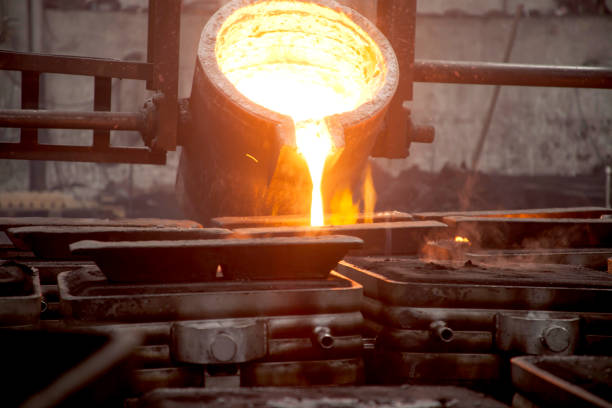
Aluminum foundry casting has actually been a staple in producing for decades, its value in model advancement continues to expand. This process involves putting molten aluminum into a mold and mildew to produce get rid of detailed styles and precise measurements. The flexibility of aluminum enables numerous casting techniques, consisting of sand, die, and financial investment casting, each offering special benefits customized to particular project needs.
Comprehending aluminum foundry casting needs knowledge of its residential or commercial properties, such as lightweight toughness, deterioration resistance, and superb thermal conductivity. These qualities make aluminum a perfect selection for models in industries ranging from auto to aerospace. Additionally, the casting process can fit intricate geometries, which is vital for testing ingenious styles. As producers increasingly look for effective and fast prototyping remedies, aluminum foundry casting stands apart as a dependable technique that boosts the efficiency of item growth cycles while maintaining premium quality and efficiency criteria.
Advantages of Rapid Prototyping
Fast prototyping supplies numerous advantages that substantially enhance the product advancement procedure. One substantial advantage is the reduction in time from concept to production. By enabling developers to develop substantial models quickly, teams can determine and attend to concerns early, minimizing costly revisions later. Additionally, fast prototyping motivates partnership among stakeholders, as physical models assist in more clear interaction and comments. This repetitive strategy cultivates innovation, enabling teams to explore multiple design iterations swiftly.
Cost efficiency is another advantage; producing models in smaller sized sets reduces product waste and decreases general expenses - Metal Casting. Quick prototyping increases market entry, enabling firms to respond to customer demands and patterns much more properly. This rate can supply an one-upmanship, especially in busy industries. Generally, quick prototyping streamlines the development procedure, improves collaboration, and reduces costs, making it an indispensable tool for modern-day product development
Layout Flexibility and Intricacy
Making use of aluminum foundry casting methods provides significant layout flexibility, permitting designers to produce complex geometries that would certainly be challenging with conventional production approaches. This capacity not just boosts visual allure but also optimizes functionality in model development. Additionally, the rapid iteration opportunities managed by these strategies make it possible for fast changes to layouts, promoting innovation and performance.
Advanced Style Capabilities
Rapid Iteration Opportunities

Decreased Lead Times and Cost Efficiency
In the domain of aluminum foundry casting, the production procedure is particularly rapid, making it possible for suppliers to bring models to market faster. This expedited timeline not only boosts responsiveness to develop changes but likewise contributes to substantial cost savings in material prices. Consequently, companies can accomplish greater expense effectiveness while preserving premium criteria in model advancement.
Rapid Production Process
While traditional production techniques might be hampered by extensive preparations, aluminum foundry casting techniques greatly streamline the manufacturing procedure. This effectiveness is achieved with the capacity to produce complicated forms and styles in a solitary step, lessening the requirement for numerous manufacturing phases. The fast turnaround from design to end up prototype permits business to accelerate their product development cycles substantially. In addition, making use of aluminum decreases the moment invested in machining and ending up procedures, even more boosting production rate. Because of this, companies can respond more rapidly to market needs and readjust layouts based upon responses without incurring considerable hold-ups or prices. In general, aluminum foundry casting assists in a quicker, more efficient pathway to model growth.
Reduced Material Prices
When utilizing aluminum foundry casting techniques, cost performance stands as an essential benefit in prototype advancement. The fundamental residential or commercial properties of aluminum, incorporated with reliable casting techniques, bring about substantial savings in product costs. Unlike various other metals, aluminum is light-weight and needs much less power to manufacture, making it an economical selection for prototypes. In addition, the capability to produce complicated shapes with marginal waste additionally reduces expenses - Metal Foundry. This efficiency not only reduces the cost of resources however likewise decreases the monetary worry related to machining and finishing procedures. Makers profit from lowered lead times and boosted production capacity, enabling them to allot sources extra effectively while maintaining high quality requirements in model development.
Improved Product Features
As advancements in aluminum foundry casting methods remain to progress, the resulting product properties show significant enhancements over standard methods. Improved mechanical features, such as boosted toughness and toughness, are essential in applications requiring reliable performance. The polished microstructures created through modern-day casting processes result in exceptional tensile stamina and fatigue resistance, making elements much more resilient under tension.
Progressed casting strategies assist in the production of lighter components without jeopardizing architectural integrity. This weight reduction is particularly advantageous in sectors such as aerospace and automobile, where performance effectiveness is important. In addition, boosted corrosion resistance is attained through maximized alloy compositions, making certain long life in various environments.
The uniformity of the cast material additionally contributes to much more foreseeable efficiency, which is necessary for model advancement. Ultimately, these boosted product residential properties not just boost the capability of prototypes however likewise improve the change to last production, sustaining faster and a lot more reliable advancement cycles.
Instance Studies in Successful Prototype Development
Successful model development is frequently exhibited through numerous instance research studies that highlight the effective application of aluminum foundry casting methods. One noteworthy instance included an automotive maker aiming to decrease the weight of engine components. By making use of aluminum casting, they efficiently produced light-weight models that maintained structural click for more integrity, resulting in improved gas performance in succeeding automobile models.
An additional study included a customer electronics firm that needed rapid prototyping for a cutting-edge product. Using aluminum foundry casting enabled them to swiftly create practical prototypes, substantially reducing their time-to-market. The precision of casting assured that the models accurately represented the last design.
In addition, a medical gadget firm leveraged aluminum casting to establish complex parts for a new surgical instrument. This strategy helped with the production of intricate geometries while ensuring biocompatibility. These study highlight the adaptability and effectiveness of aluminum foundry casting in driving successful model development across varied industries.
Often Asked Inquiries
What Types of Products Are Ideal Fit for Aluminum Foundry Casting?
Aluminum foundry casting try this web-site is ideal for generating automobile parts, aerospace parts, and consumer electronics real estates. Its lightweight nature, exceptional thermal conductivity, and corrosion resistance make it appropriate for a variety of applications across various industries.
Just How Does Aluminum Casting Compare to 3D Printing for Prototypes?
Aluminum casting commonly offers higher toughness and surface area coating contrasted to 3D printing, making it appropriate for practical prototypes. Conversely, 3D printing allows for rapid iterations and intricate geometries, enhancing style flexibility during development.
What Is the Regular Life-span of an Aluminum Model?
The typical life expectancy of a light weight aluminum model can vary substantially, yet it typically varies from their explanation a number of months to a couple of years, depending on usage problems, ecological elements, and the details layout and manufacturing procedures utilized.
Exist Environmental Interest In Aluminum Casting Processes?
Environmental interest in aluminum casting processes include power intake, greenhouse gas discharges, and waste generation. Furthermore, the mining of bauxite, the key aluminum ore, increases concerns associated with habitat damage and water contamination.
Just How Can I Select the Right Aluminum Alloy for My Prototype?
To select the appropriate aluminum alloy for a prototype, one must consider mechanical residential properties, corrosion resistance, weight, and desired application. Consulting product specifications and carrying out tests can better lead the option for suitable performance and toughness.
Aluminum foundry casting methods have actually emerged as a crucial method in prototype development. As producers increasingly embrace aluminum foundry casting techniques, they get access to advanced design abilities that boost both flexibility and complexity in prototype development. Aluminum foundry casting strategies use considerable chances for fast version in model development, allowing developers to fine-tune their concepts with amazing speed. Cost efficiency stands as a crucial benefit in prototype growth when making use of aluminum foundry casting techniques. Effective model development is frequently exemplified via various situation researches that highlight the effective application of aluminum foundry casting methods.